
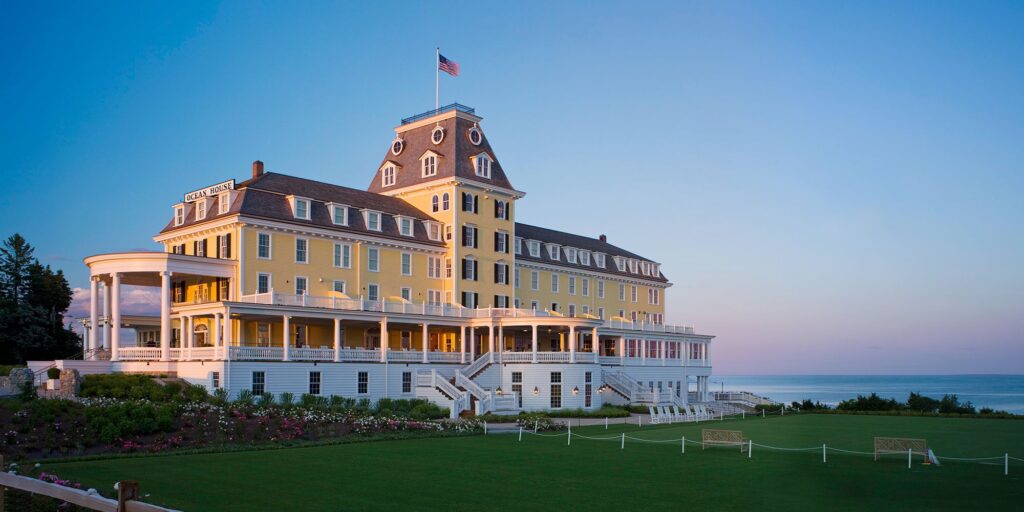
These historic hotels offer a great night’s rest, exceptional service and an opportunity to walk through history.
Although it was much more difficult to travel in the past, it is still possible for people to move around for trade, leisure, or pilgrimages. They needed to be safe, have a decent meal, and sleep well. These places survived the turbulent history of humankind and offer accommodation and meals today, but not without modern conveniences.
Book your next vacation with a night at one of these historic hotels to get the chance to experience nurtured history in action.
Hotel Balzac, Paris, France
Hotel Balzac is a rich source of history, dating back to the 19th century. It could be as easily taken straight from a book.
A French banker commissioned the building as a private residence. The property was re-owned several times after the death of the banker. It became one of Paris’ most beloved salons. Honore de Balzac was the most well-known resident, who lived there until he died in 1850. In 1875, the hotel was built on the property.
It still retains its 19th-century splendour despite recent renovations. 13 suites and 56 rooms have a neoclassical design with rich colours – think bold blues, rose taupe, and rich burgundies. Pierre Gagnaire Restaurant, a Michelin star restaurant, can be found in the hotel.
Hoshi Ryokan – Komatsu, Japan
Hoshi Ryokan has been in operation for nearly 1,300 years. It is also one of the oldest hotels worldwide. A ryokan was a traditional Japanese inn that served travellers on Japan’s roads. The rooms in a ryokan were usually equipped with tatami mats or shared baths.
The hotel is located on the Sea of Japan coast. It opened in 718 and has been run by the same family since 1976. Legend has it that the founder was a Buddhist monk who received a message from God to find a hot spring near his village. The monk discovered the hot spring and found a local who helped him build a spa around the area. Thus was born a dynasty for innkeepers.
The hotel can accommodate up to 450 people at the moment. Hot springs are still a big draw. The water is said to have healing properties.
Zum Roten Baren – Freiburg im Breisgau, Germany
Zum Roten Baren (To the Red Bear) is a hotel that dates back to the 12th century. It can be found at the Black Forest’s western edge in Freiburg im Breisgau.
The hotel is located in the heart of the old city. The 51st bear innkeeper manages it. Innkeepers have had to deal with many social and political changes throughout their history:
- Foreign sieges.
- The rise and fall of guilds and transitions from one ruler to another.
- The numerous diseases that plagued the Middle Ages.
Although the building was partially destroyed in World War Two, it still has a historical façade with its original coat of arms on a pink background.
Omni Parker House – Boston MA, USA
Omni Parker House’s story is a classic tale of rags to riches. Harvey Parker, a young man from Massachusetts, arrived in Boston in 1825. In the US, hotels were not yet available. Instead, travellers stayed at taverns, which were simple and mostly populated by men. Harvey was poor and took up a job as a coachman. After years of successful operation, Harvey bought a restaurant with his savings. He then purchased the property that would be the Omni Parker House. It was originally called Parker House Hotel and opened its doors in 1855.
This hotel has been home to many notable writers, actors, and politicians over the years. Here was Charles Dickens’ first American reading. From here, John F. Kennedy declared his candidacy to be a congressman. The hotel even created Boston Cream Pie.
The hotel has 551 rooms, 3 restaurants and 2 suites.
The Olde Bell – Hurley (United Kingdom)
The Olde Bell is a unique accommodation in the English countryside, just one hour from London. The hotel was founded in 1135 and comprised several historic buildings that function as a village. The main hotel is for overnight guests, locals, and the adjoining buildings are used for private events.
You will love the al fresco dining experience here. Enjoy a roast in their Summer Kitchen, a picnic in the orchard, or a glass of white wine in our wild gardens. A countryside holiday would not be complete without a walk. Please look at the Kitchen Gardens, where they grow fruits & vegetables. Or stroll along the Thames for a beautiful stretch just 10 minutes away.
It is close to Pinewood Studios, so celebrities frequent it. This location has also been used for filming.
Hotel Interlaken – Interlaken, Switzerland
Interlaken, a Swiss resort, is located between two lakes, surrounded by mountains. It was popularized in the 1800s and attracted many artists, composers, and writers. Lord Byron, an English poet, and Felix Mendelsohn (a German composer) visited Interlaken. They left their marks on Hotel Interlaken, one of the oldest hotels in the city.
Hotel Interlaken, originally a Cloister, was first described as a guesthouse back in 1323. It underwent a complex renovation in 1491. The coat of arms that it received is still visible on its facade.
Recent renovations have raised the standards of this hotel while keeping its original appearance.
Pera Palace Hotel Jumeirah – Istanbul, Turkey
Enter a world of elegant, old-fashioned opulence. The Pera Palace Hotel was opened in 1892 to serve wealthy European travellers on the Orient Express. Although he was inspired by Parisian architecture and added local touches to make guests feel at home, he also created a new world.
The hotel’s original design was preserved, despite undergoing a major renovation in 2010. The lobby’s extension houses the Kubbeli Saloon Tea Lounge. It is decorated in Belle Epoque colours, with a royal effect. The ceiling is adorned with six domes.
Many personalities have visited the Pera Palace throughout its existence, including novelist Agatha Christie. During a stay at the Pera Palace, she allegedly wrote Murder on the Orient Express.
Fleischer’s Hotel – Voss, Norway
Fleischer’s hotel, a Swiss-style construction in the Norwegian wonderland Voss, is a family-run hotel that has hosted many kings, queens, and princes over its history.
Fredrik Lyth Orum Fleischer was able to open the hotel’s doors with the proceeds from the sale of the Voss Church, which had been part of his family’s property. Fleischer’s hotel was a place that emphasized hospitality and a beautiful location with lush forests, scenic lakes, and snow-capped mountains. It quickly became a favourite spot for ordinary and aristocrat travellers.
After several renovations, the hotel now has 110 rooms and two restaurants. It also boasts a bar, a restaurant, a summer terrace, and other wellness amenities.
Belmond Grand Hotel Europe, Saint Petersburg, Russia
The famous Belmond Grand Hotel Europe is located in the heart of Saint Petersburg’s metropolis.
The original three buildings were built separately. In 1830, the hotel was opened by Carlo Rossi, an Italian architect who beautifully combined the buildings into one elegant facade. It was renovated several times and served as an orphanage during World War II.
The spacious interior features three restaurants, a cafe, and a bar. You can indulge in fusion Asian cuisines, champagne dining and caviar, or relax with afternoon tea and chocolates made at the hotel’s chocolate factory.
The Belmond has hosted many famous guests over the years, and they decided to honour a few. Ten suites have been preserved from the past, each dedicated to a famous guest, such as The Romanov Suite, The Dostoevsky Suite and The Pavarotti Suite.
Parador de Santiago (Hostal dos Reis Catolicos) – Santiago de Compostela, Spain
Parador de Santiago, or Hostal dos Reis Catolicos, is located at the end of Santiago de Compostela’s famed pilgrimage trail.
The Catholic monarchs Ferdinand, Isabel, and their wives embarked on the pilgrimage in the 15th century. They decided, after completion, to repair the infrastructure. The Hostal was opened to pilgrims in 1499 as a place for recovery and rehabilitation after completing the pilgrimage. All services were provided free of charge by the Hostal, including doctors, nurses, priests and other medical personnel. The Hostal has five stars today.
The building’s facade is Plateresque and faces the Obradoiro Square. The Spanish Renaissance and Baroque stories are told through vaulted ceilings and antique furniture.
As a tradition, the first 10 pilgrims who cross the threshold of Parador every day receive a free lunch.
Norre Vissing Kro – Skanderborg, Denmark
The Danish kinds date back as far as the 13th century when a royal decree required that every 25 miles there be a roadside hotel. Many still exist, and they are often located in remote areas, making them ideal for countryside holidays.
Norre Vissing Kro is hidden behind small trees and hills on the east coast of Jutland’s east coast. It is painted in bright blue. This kro was opened in 1801 and quickly gained a royal privilege, a special distinction given by the king. After a recent renovation, the Kro blends elements from the past and modern Danish interiors. The garden room is covered in lavender nuances and offers views over the fields. The crackling sounds from the fireplace create a calm atmosphere.
Morten Mygind is the chef and restaurant’s star. He creates fusion dishes using fresh, local ingredients.